
Today SHAN DONG JIE HAN share with all our related customers and friends about test methods of Aluminum paste.

I Visual Inspection Methods

1. Draw panel Measurement Method
This is a basic testing method widely recognized by China aluminum paste manufacturers.
Testing Steps:
1.1 Reagent Preparation materials: Ethyl acetate, acrylic resin, or varnish
1.2 Instrument Preparation: Beakers, glass rod, electronic balance accurate to 0.01g, 75μm scraper, flat black and white cardstock
1.3 Sample Preparation: Take same quality of aluminum paste 2 cups, standard sample and test sample (e.g., 0.25±0.01g), and place them separately in two beakers.
1.4 Dispersion and Mixing: Mix the aluminum paste with the dispersion medium and solvent as agreed proportions, and use low-speed stirring to fully disperse the sample.
1.5 Scraping Operation: Pour the mixture onto both sides of the black and white cardstock, and use the scraper to scrape it smoothly and evenly from top to bottom.
1.6 Result Evaluation: Compare the test sample with the standard sample; consistency in whiteness, brightness, particle size, flatness, and hue shade is considered acceptable.
2. Visual Inspection under Multiple Illumination Conditions
Daylight Visual Inspection
Strong Light Illumination
Multi-Frequency Light Illumination
Blue Light Illumination
II Instrument measurement method
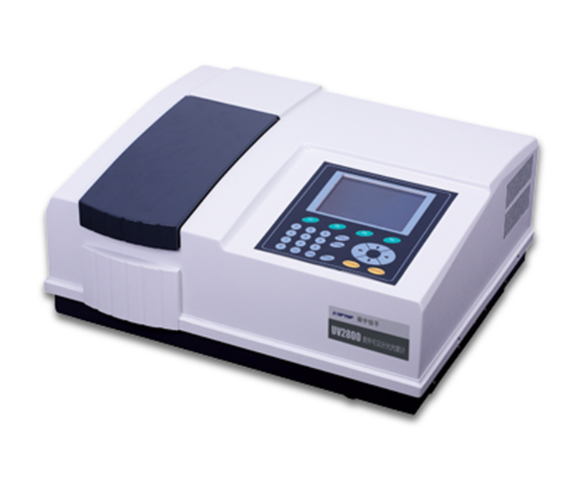
2.1. Spectrophotometer Testing
A spectrophotometer (including integrating sphere) is used to measure standard color samples prepared from aluminum paste, focusing on the following parameters:
L-value: Brightness (lightness/darkness)
a/b value: Hue tendency (a represents red-green, b represents yellow-blue)
Metallicity index: Brightness contrast at a specific angle
Overall visual effect: such as whiteness, grayscale
2.2. Colorimeter Testing

A colorimeter obtains color light differences through multi-channel light, quantifying hue differences with data.
Meaning of color difference parameters:
ΔE: Total color difference (determines product qualification)
ΔL: Lightness/darkness difference. A positive value indicates the sample is brighter than the standard; a negative value indicates it is darker.
Δa: Red-green difference. A positive value indicates the sample is more reddish than the standard; a negative value indicates it is more green.
Δb: Yellow-blue difference. A positive value indicates the sample is more yellow than the standard; a negative value indicates it is more blue.
III National Chemical Industry Standard
According to the national chemical industry standard HG/T 2456.1-2013, the method for inspecting the appearance of paint is as follows:
Materials and Instruments:
Dispersion Medium: As agreed (acrylic resin is recommended)
Solvent: Suitable for the dispersion medium
Substrate: Smooth and non-absorbent (e.g., tinplate, steel plate, glass plate, black and white cardboard)
As agreed reference sample
Balance: Electronic balance accurate to 0.01g
Operating Procedure:
3.1 Weigh approximately 2g of aluminum paste, accurate to 0.01g.
3.2 Mix the sample with the dispersion medium and solvent in the agreed proportion, and stir at low speed to fully disperse.
3.3 Apply the mixture to the substrate using an appropriate method, and dry naturally or in an agreed method to prepare a paint film sample.
3.4 Prepare a paint film sample of the agreed reference sample using the same method.
3.5 Visually observe the paint film sample and compare it with the reference sample. Observe whether it has a good silvery-white metallic luster, decorative properties, smoothness, and a similar appearance.
IV In conclusion

Standardized Operation: The same dispersion medium, solvent ratio, and operating method must be used during testing to ensure comparability of results.
Environmental Control: Visual inspection should be performed under standard lighting conditions to avoid ambient light interference.
Sample Preparation: The aluminum paste must be fully dispersed in the medium to prevent agglomeration from affecting the test results.
Data-Driven Trend: Traditional visual inspection methods are gradually evolving towards instrument-based data-driven testing. Equipment such as colorimeters can provide more objective quantitative data.
In practical applications, visual inspection and instrument testing are usually combined to ensure both intuitive judgment and accurate data, thereby ensuring the consistency and stability of the aluminum paste hue.
Shan Dong Jie Han as a professional manufacturer of aluminium paste for 20 years, provide many grades for choice, leafing Aluminium paste, Non leafing Aluminium paste, suits for different applications such as various kinds of paints and coatings, industrial paints, marine anti corrosion paints, roof coating, coil coating, decoration paints, automotive paints, masterbatch and plastic, offset ink , gravure ink, flexo ink etc printing ink.
For more details , welcome contact info@jhaluminiumpaste.com