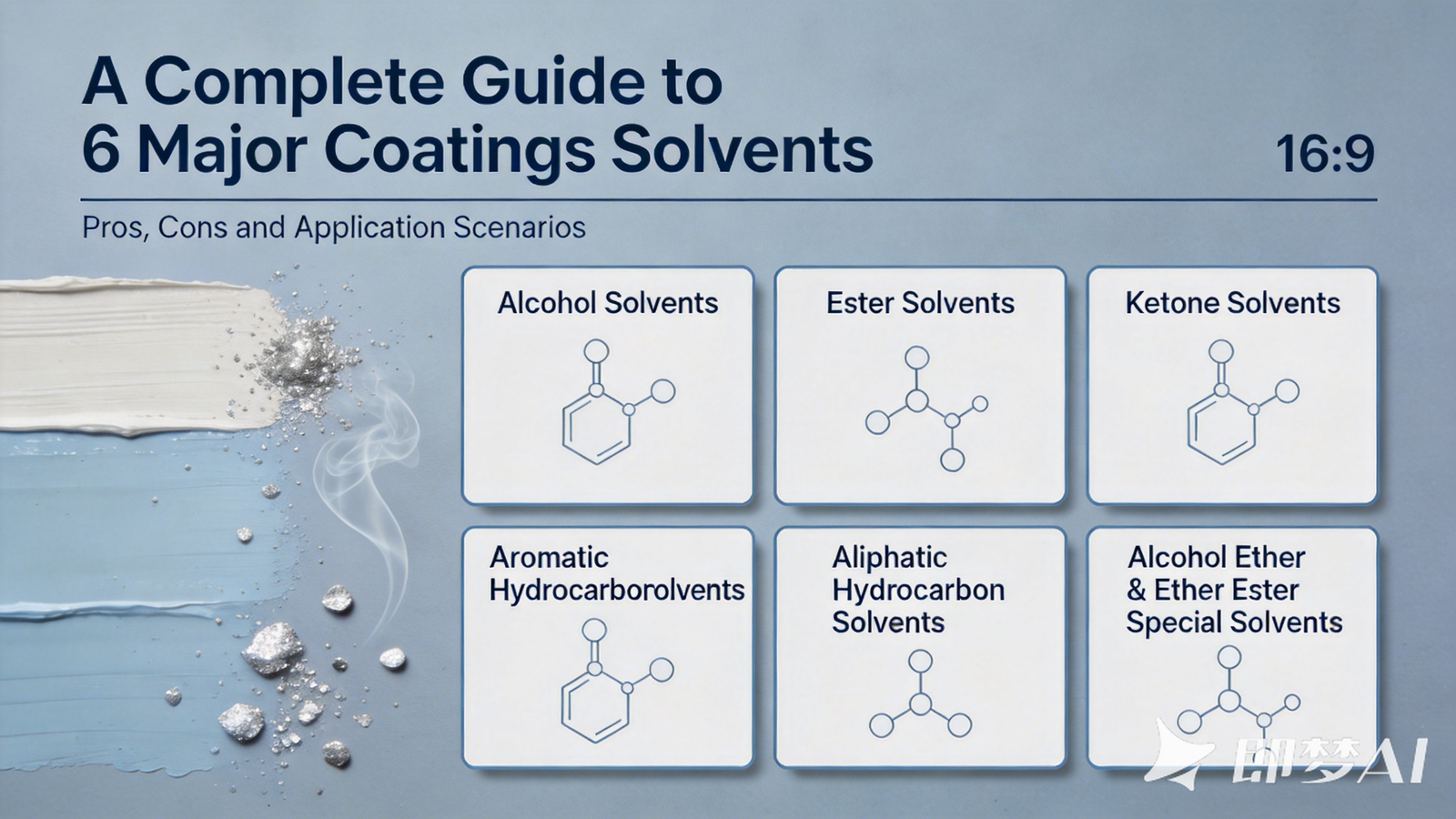
In coatings formulation, solvents are never mere diluents. They fundamentally determine the drying speed, film leveling, surface gloss, and pigment orientation of finished coatings. Most common coating defects, such as blushing, pinholes, uneven gloss and poor metallic alignment, stem from improper solvent selection and mismatched volatility systems.
Based on the three core evaluation indicators of solvents — dissolving power, evaporation rate and polarity — this article comprehensively analyzes six mainstream solvent categories widely used in the coatings industry. It systematically sorts out their performance characteristics, advantages, limitations and applicable scenarios to help industry practitioners accurately select and rationally formulate solvents.
1. Alcohol Solvents
Representative solvents: Methanol, Ethanol, Isopropyl Alcohol (IPA), n-Butanol
Performance Features: Alcohols feature high polarity and deliver excellent dissolving performance for polyurethane and alkyd resins. They cover a complete evaporation range from low-boiling fast-drying to high-boiling slow-drying grades, with flexible applicability.
Application Scenarios: Ethanol and IPA are ideal co-solvents for water-based paints, effectively preventing film blushing and improving construction performance. High-boiling n-butanol is commonly added to amino paints to optimize film leveling and enhance surface flatness.
Limitations: Methanol has high toxicity and is rarely adopted in industrial coating production. In addition, alcohols have limited independent dissolving capacity and can only be used as auxiliary solvents for compound formulation instead of single primary solvents.
2. Ester Solvents (Most Widely Used in Coatings Industry)
Representative solvents: Ethyl Acetate (EA), n-Butyl Acetate (BA), Propylene Glycol Methyl Ether Acetate (PMA)
Performance Features: Ester solvents boast extremely strong dissolving power, compatible with nitrocellulose (NC), polyurethane (PU), acrylic and other mainstream coating resins. With a complete evaporation gradient, mild odor and low toxicity, they cause negligible erosion on the coating layer of aluminum silver powder, making them the preferred true solvents for metallic paints.
Application Scenarios: n-Butyl Acetate (BA) serves as a universal medium-speed solvent for most conventional coatings. High-boiling PMA and EEP are core slow-drying solvents for mirror silver paints and high-end PU paints, which can effectively assist aluminum powder orientation and present a delicate and uniform metallic finish.
Core Advantages: Friendly to aluminum powder coating layer, no damage to metallic texture, stable and reliable for high-grade metallic coating formulation.
3. Ketone Solvents
Representative solvents: Acetone, Methyl Ethyl Ketone (MEK), Methyl Isobutyl Ketone (MIBK), Cyclohexanone
Performance Features: Ketone solvents own the top-level dissolving capacity among all coating solvents, covering full evaporation speed ranges from ultra-fast drying to high-boiling slow drying, with strong adaptability to various resin systems.
Application Scenarios: Acetone and MEK are applied to nitrocellulose paints for powerful dissolving and rapid film forming. A small amount of cyclohexanone can significantly improve film leveling and eliminate surface flaws.
Limitations: Ketones are highly corrosive to the protective coating of aluminum powder. Pure ketone solvents are strictly prohibited as primary solvents for mirror silver paints. Meanwhile, they have pungent odor and high flammability, requiring strict dosage control in production.
4. Aromatic Hydrocarbon Solvents (Cost-Effective Universal Solvents)
Representative solvents: Toluene, Xylene, 100# / 200# Aromatic Solvent Oil
Performance Features: With strong dissolving power and low cost, aromatic hydrocarbon solvents are highly cost-effective industrial solvents. High-boiling aromatic products can flexibly adjust the overall evaporation rate of coating systems.
Application Scenarios: Widely used as diluent components for NC, PU and alkyd paints, applicable to most conventional industrial coating formulas.
Limitations: They have strong odor and potential carcinogenic risks, restricted by environmental protection policies in many regions. Besides, they will slightly erode aluminum powder coating, so the addition amount must be strictly controlled in metallic paint formulas to avoid affecting metallic effect.
5. Aliphatic Hydrocarbon Solvents (Pure Diluent Solvents)
Representative solvents: 120# / 160# / 200# Aliphatic Solvent Oil
Performance Features: Aliphatic hydrocarbon solvents have the weakest dissolving capacity among the six categories and cannot dissolve coating resins independently. They feature low toxicity and better environmental performance compared with aromatic hydrocarbons.
Positioning and Usage: They are pure filling diluents, mainly used to reduce raw material costs and finely adjust the overall evaporation rate of the formula. They must be compounded with true solvents such as esters and ketones and cannot be used alone, otherwise resin precipitation and coating defects will occur.
6. Alcohol Ether & Ether Ester Special Solvents (High-End & Water-Based Paint Dedicated)
Representative solvents: Propylene Glycol Methyl Ether (PM), Ethylene Glycol Butyl Ether (BCS), PMA, EEP
Performance Features: These high-boiling solvents evaporate slowly with top-tier film leveling performance. With moderate polarity, they are highly friendly to aluminum powder and miscible with water, perfectly matching the technical requirements of high-end and environmentally friendly coatings.
Application Scenarios: Widely used in water-based coating co-solvents, mirror silver paints, high-end plastic paints and epoxy coating systems. They are core environmentally friendly alternatives to replace traditional toluene and xylene under industrial upgrading trends.
Quick Selection Summary of Coating Solvents
1. Conventional General Industrial Paints: Main formula with ester solvents + xylene
2. Mirror Silver Metallic Paints: Prioritize high-boiling esters (PMA/EEP), strictly limit the dosage of ketones and aromatic hydrocarbons
3. Water-Based Epoxy & Amino Paints: Adopt alcohol ether special solvents
4. Cost Control & Volatility Adjustment: Appropriately add aliphatic solvent oil for dilution and modification
A clear grasp of solvent properties is the premise of scientific coating formulation. In the next article, we will further share practical skills, including the dilution formula logic of different resins, technical red lines for mirror silver processes, and solvent adjustment solutions for common film defects.
If you would like to have a discussion with me, you can contact me via WhatsApp at: 13176019165 or by email at: mumu@jhaluminiumpaste.com