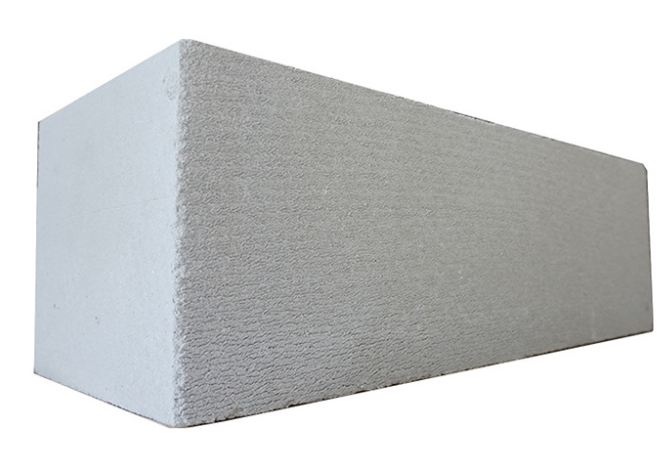
Aluminum Paste for Aerated Concrete (JC/T 407-2008)
JC/T 407-2008 is the industrial standard for aluminum paste applied to aerated concrete. Formulated by industry specialists based on practical production experience from manufacturers and end users, this standard provides technical foundations for the production, application and inspection of aerated-concrete-grade aluminum paste. Key quality indicators of the product are summarized as below:
1. Active Aluminum Content of Aluminum Paste
The gas generation capacity of aluminum paste dictates its dosage in aerated concrete production. Gas generation capacity refers to the volume of hydrogen produced per unit mass of aluminum reacting fully with water under standard conditions. The theoretical hydrogen yield of 1 gram of metallic aluminum under standard conditions is 1.24 liters. However, commercial industrial aluminum contains minor impurities, and partial aluminum is oxidized into aluminum oxide, resulting in actual gas output lower than the theoretical value. Only aluminum capable of reacting to generate hydrogen is defined as active aluminum. As aluminum paste inherently contains a certain proportion of moisture, solid content serves as another critical control index. Within aerated concrete slurry, higher content of active metallic aluminum translates to greater hydrogen generation volume.
2. Fineness of Aluminum Powder
Aluminum fineness has no impact on total gas yield but directly affects gas generation rate. Finer aluminum powder features larger specific surface area and reactive contact area, triggering earlier initiation and faster completion of gas evolution. Strict fineness control is mandatory during aluminum paste manufacturing. Significant fluctuations in particle fineness arising from divergent production facilities and processing technologies will compromise casting stability of aerated concrete.
3. Particle Morphology of Aluminum Powder
Particle shape exerts a vital influence on the gas-generating properties of aluminum paste. Qualified aluminum powder for aerated concrete is required to be irregular flaky or leaf-shaped after ball milling. Milling flattens aluminum particles into thin flakes with enlarged fresh metallic reactive surfaces to facilitate gas-forming reactions. During grinding, repeated impacting and rolling stretches and fractures aluminum grains into flat fragments with abundant irregular edges. Lattice distortion and fracture along these irregular edges create highly chemically active zones, enabling optimal gas generation performance.
4. Gas Evolution Rate of Aluminum Paste
The aforementioned physical and chemical properties of aluminum paste are ultimately verified through its expansion performance inside concrete slurry; hence testing real-time gas evolution behavior delivers comprehensive quality evaluation. Gas evolution rate denotes the percentage of cumulative total hydrogen produced at specified time intervals (test procedures specified in industrial standard JC/T 407-2008). The optimal technical specifications are: 4 min: 40%~60% of total gas; 16 min: ≥80% of total gas; 30 min: ≥99% of total gas. Excessively fast early gas release causes hydrogen to escape from fresh slurry, leading to collapsed castings or oversized merged pores. Conversely, delayed or prolonged tail-end gas evolution traps hydrogen inside thickened, non-flowable slurry after setting, forming interconnected voids and product cracking. Therefore gas evolution rate is an indispensable benchmark for aluminum paste qualification assessment.
5. Water Dispersibility of Aluminum Paste
Qualified aerated-concrete aluminum paste is hydrophilic and able to suspend uniformly in aqueous slurry. Superior water dispersibility ensures homogeneous distribution and timely gas reaction upon mixing with raw slurry. Some manufacturers recycle scrap aluminum contaminated with grease or water-insoluble contaminants, which coat aluminum particle surfaces and impair water dispersibility. Poor dispersion causes aluminum agglomeration, irregular gas generation and defective final cast concrete.